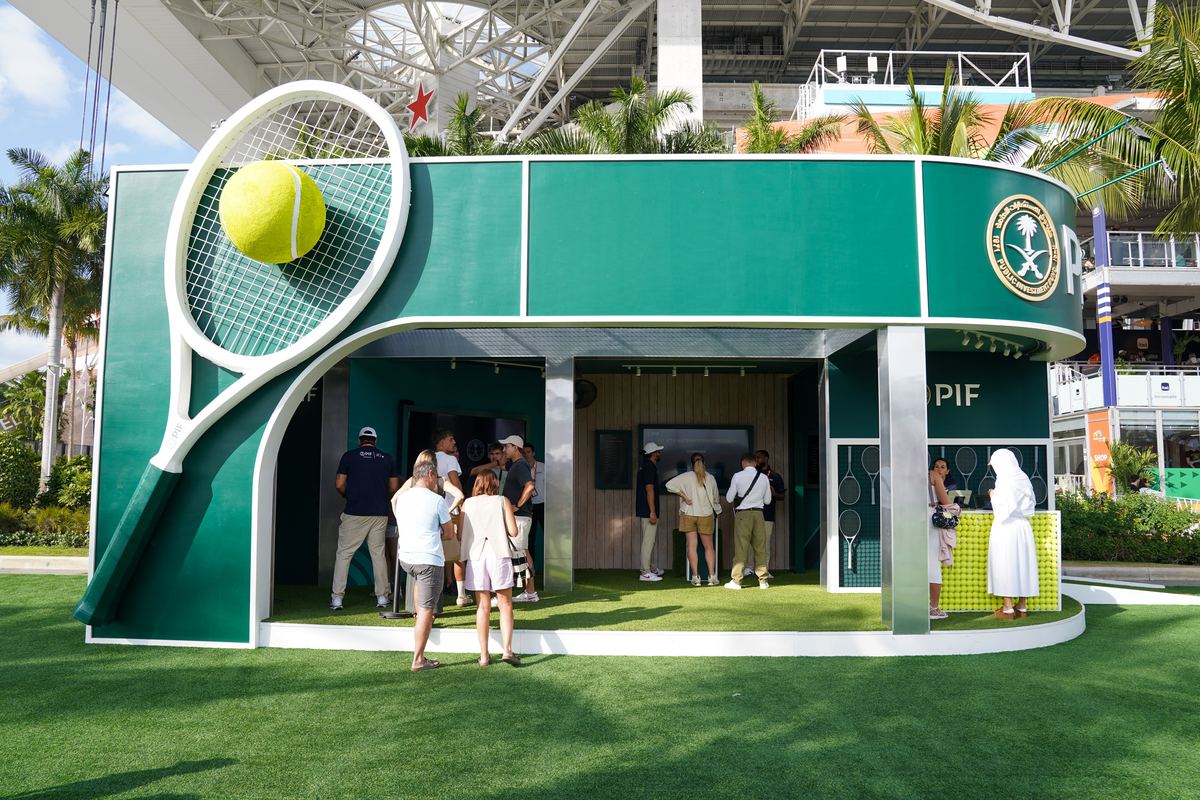
Over two weeks every March, Hard Rock Stadium quietly outdraws Art Basel and the Miami Grand Prix combined. In 2026, more than 420,000 people passed through the gates, a tournament record, including the largest single-match crowd in Miami Open history and the largest WTA crowd anywhere in North America. Most of Miami barely notices.
Why it matters now
The Miami Open just finished its 41st edition, and it is quietly one of the largest annual gatherings in South Florida. It generates an estimated $400 million in economic activity for Miami-Dade County, in the same range as Art Basel and the Formula 1 Miami Grand Prix, while drawing more total attendees than either. It gets a fraction of the press coverage of both.
By the numbers
Where it sits on the tour
The Miami Open is an ATP Masters 1000 and WTA 1000 event, one rung below the four Grand Slams, but it is often called tennis's unofficial fifth major. It fields the same top players who show up at Wimbledon or the US Open: Alcaraz, Sinner, Sabalenka, Gauff. Combined with the Indian Wells tournament two weeks earlier in California, winning both in the same year is called the Sunshine Double, and it is one of the rarest feats in the sport. Only eight men and five women have ever done it. Jannik Sinner and Aryna Sabalenka both pulled it off in 2026.
The tournament has moved venues twice, from Delray Beach in 1985 to Key Biscayne for three decades, and finally to Hard Rock Stadium in 2019, home of the Miami Dolphins. In 2026, it also became the first Masters 1000 or WTA 1000 event to host a full wheelchair tennis draw sanctioned by the International Tennis Federation, adding a new dimension to the tournament's reach.
The sponsor money, and why it's here
Look closely at who is paying for the naming rights and suite access, and a more interesting story shows up. PIF, Saudi Arabia's sovereign wealth fund, is a Platinum Partner of the Miami Open and the first and only entity to hold naming rights across both the ATP and WTA global rankings. It is part of a much larger pattern: PIF has spent years building a sports portfolio that spans golf, football, and now tennis, using marquee sponsorships to build long-term global visibility.
Sponsor Snapshot
- What it is
- Saudi Arabia's sovereign wealth fund
- Tennis role
- Platinum Partner of the Miami Open; first and only naming partner of both the ATP and WTA world rankings
- Strategy
- Part of a broader global sports investment push spanning golf, football, and tennis
Itaú, the Brazilian bank that has held the tournament's title sponsorship since 2015, has a more direct commercial logic. Miami has one of the largest concentrations of affluent Brazilian residents and part-time residents of any U.S. city, and Itaú's Miami Open sponsorship is a way to stay visible to that exact audience. The bank isn't alone in seeing the opportunity: Nubank, its Brazilian fintech rival, recently bought the naming rights to Inter Miami's new stadium, a separate but parallel bet on reaching the same wealthy Latin American audience through Miami sports.
The Miami Open outdraws Art Basel and the Formula 1 Grand Prix combined, and still gets a fraction of the attention either one receives.
Who's actually in the stands
The tournament is built to serve very different budgets under one roof. Grounds passes are priced to be accessible to a broad local audience, while stadium suites for the full two-week run have gone for more than $100,000, and individual box seats can run into the thousands per session. That range, from a family with grounds passes to a suite full of sponsor guests, is part of what makes the Miami Open a genuinely citywide event rather than a niche one.
What to watch
- Whether Sinner and Sabalenka's 2026 Sunshine Double sweep strengthens the case for the Miami Open's "fifth major" reputation in future scheduling conversations.
- Whether Nubank's stadium naming-rights move signals a broader fintech sponsorship rivalry playing out across Miami's biggest sporting events.
- How the tournament's new wheelchair tennis draw grows in scale and visibility in the years ahead.